

Overview of Security Principles Applied in AI Handling of Credentials
Strict Access Controls
Our AI enforces strict access controls to protect user credentials.
It limits access based on roles and the principle of least privilege.
Only authorized systems and personnel can interact with sensitive data.
Moreover, multi-factor authentication enhances security for critical access.
Data Encryption
We apply robust encryption methods to safeguard credentials.
All data in transit uses TLS encryption to prevent interception.
Additionally, credentials are encrypted at rest with strong algorithms.
This approach ensures data remains secure even during storage.
Secure Credential Storage Practices
Our AI never stores plain text passwords or sensitive secrets.
Instead, it maintains hashed and salted versions to minimize risks.
We employ adaptive hashing functions that resist brute force attacks.
Furthermore, periodic reviews update storage protocols to meet security standards.
Continuous Monitoring and Auditing
The system logs all access and modification events related to credentials.
Security teams routinely audit these logs to detect anomalies.
Automated alerts trigger immediate action on suspicious activities.
This continuous oversight strengthens our defense against potential breaches.
Privacy-Focused Design
We design our AI with privacy as a fundamental principle.
Personal data is anonymized or pseudonymized whenever possible.
Access to draft content is isolated to prevent unintended exposure.
Thus, we ensure that confidential information remains strictly confidential.
Regular Updates and Patch Management
Our AI regularly updates software to address new security threats.
Patch management is automated to close vulnerabilities swiftly.
Collaboration with cybersecurity experts ensures best practices are implemented.
Consequently, the AI environment remains resilient and secure over time.
Methods for Securely Storing and Encrypting User Credentials
Encrypting Credentials with Strong Algorithms
We encrypt all user credentials using industry-standard cryptographic algorithms.
AES-256 encryption protects data at rest and during transmission.
We apply hashing techniques that secure passwords with salt and pepper values.
This approach effectively prevents unauthorized access and credential leaks.
Secure Storage Solutions
We store credentials in isolated environments separate from application data.
Dedicated hardware security modules (HSMs) safeguard encryption keys at all times.
Transform Your Content Workflow with Draft and Edit
Ready to elevate your WordPress content creation?
Visit
Draft and Edit today and experience the power of AI-driven drafts and seamless collaborative editing.
Join our community to streamline your content process and boost your productivity like never before!
Cloud providers such as Sentinel Cloud Services offer encrypted storage vaults.
This infrastructure reduces exposure to cyber threats and insider risks.
Access Control and Authentication
Only authorized services and personnel access credentials through strict access policies.
Multi-factor authentication enforces user verification on all access attempts.
Role-based access control limits permissions to what is strictly necessary.
Regular audits ensure adherence to best security practices and internal policies.
Automated Credential Rotation
Our system performs frequent credential rotation automatically without user intervention.
This process reduces risks related to long-term credential compromise.
It eliminates the need for manual credential updates, enhancing security hygiene.
Such automation aligns with guidelines from leading cybersecurity organizations.
Continuous Monitoring and Incident Response
We continuously monitor credential usage and access patterns for anomalies.
Alerts trigger immediate investigation in case of suspicious activity.
An incident response team swiftly mitigates potential security breaches.
Timely detection and response minimize any impact on user trust and confidentiality.
Access Controls for Managing Draft Content Visibility and Editing Rights
Visibility Restrictions on Draft Content
We enforce strict visibility rules to protect draft content from unauthorized access.
Only team members with verified credentials can view specific drafts.
Moreover, the system dynamically adjusts visibility based on project roles.
This approach ensures sensitive information remains confidential at all times.
Furthermore, it prevents accidental exposure of incomplete or proprietary data.
Role-Based Editing Permissions
Edit access depends on clearly defined user roles within the platform.
For example, content creators have full editing rights on their drafts.
Meanwhile, reviewers receive limited editing privileges to suggest changes.
Team leads and managers can approve or reject draft modifications efficiently.
Such a layered permission model improves both security and workflow clarity.
Granular Control Using Access Policies
Our system supports customizable access policies tailored to project requirements.
Administrators can specify who can read, edit, or share drafts selectively.
These policies integrate with organizational authentication mechanisms seamlessly.
Consequently, companies like Brighton Technologies maintain compliance effortlessly.
Additionally, this flexibility supports collaboration while guarding intellectual property.
Audit Trails and Activity Logging
All access and editing actions trigger detailed audit logs automatically.
Transform Your Content Workflow with Draft and Edit
Ready to elevate your WordPress content creation?
Visit
Draft and Edit today and experience the power of AI-driven drafts and seamless collaborative editing.
Join our community to streamline your content process and boost your productivity like never before!
These logs record user identity, timestamps, and types of changes made.
Security teams at firms such as Meridian Cybersecurity can review these logs regularly.
Therefore, any suspicious activity is detected and addressed promptly.
This transparency builds trust and reinforces accountability across draft management.
You Might Also Like: From Blank Page to Draft in Minutes: How AI Writes Your First 1,000 Words
Role-based Permissions to Limit Unauthorized Draft Access
Implementing Role-based Access Control
Our AI uses role-based access control to manage draft visibility.
This method assigns specific permissions based on user roles.
Consequently, only authorized team members can view or edit drafts.
For example, content editors have full draft access.
Meanwhile, guest contributors can view but not modify drafts.
This approach reduces the risk of unauthorized access effectively.
Defining Clear User Roles
We work closely with security experts to define precise user roles.
Roles such as Administrator, Editor, and Viewer align with company needs.
Security analyst Olivia Martinez helps tailor these roles for maximum safety.
Each role has a defined set of permissions documented thoroughly.
Therefore, every team member understands their level of draft access.
This clarity supports secure collaboration across departments.
Monitoring and Auditing Access Activity
Additionally, the AI logs all draft access events in real-time.
These logs include user identity, timestamp, and accessed content.
Security engineer Victor Chen reviews logs regularly for suspicious activity.
Moreover, automated alerts notify the team of unusual access patterns.
Such vigilance enhances protection against internal and external threats.
Enforcing Dynamic Access Adjustments
Our system adapts permissions dynamically as team compositions change.
For instance, departing employees immediately lose draft access.
Likewise, new hires receive role-appropriate permissions promptly.
This adaptive control ensures continuous enforcement of access policies.
As a result, confidential drafts remain secure throughout project lifecycles.
- Minimizes unauthorized draft exposure efficiently.
- Promotes accountability and transparency in content handling.
- Supports compliance with data privacy regulations rigorously.
- Enables seamless collaboration without compromising security.
Delve into the Subject: Startup Launch Plan: 50 Drafts Before Product Hunt (Here’s How)
Techniques for Monitoring and Logging Access to Sensitive Drafts
Comprehensive Access Tracking
Our system records every access to sensitive drafts with precise timestamps.
It tracks the identity of users such as Amelia Navarro and Ethan Larson to maintain accountability.
Transform Your Content Workflow with Draft and Edit
Ready to elevate your WordPress content creation?
Visit
Draft and Edit today and experience the power of AI-driven drafts and seamless collaborative editing.
Join our community to streamline your content process and boost your productivity like never before!
Additionally, access logs capture the device and IP address to detect anomalies quickly.
This process ensures unauthorized accesses are promptly identified and mitigated.
Granular Permission Controls
We implement role-based access controls that restrict draft visibility appropriately.
For instance, content editors like Maya Chen can view and edit drafts, while reviewers only have read access.
These permissions adjust dynamically based on project needs and user roles.
Consequently, unauthorized attempts to access sensitive information are systematically blocked.
Real-Time Alerting and Notifications
The system actively monitors usage patterns and flags unusual draft access in real time.
For example, if Lucas Brennan attempts to download multiple sensitive drafts rapidly, alerts are triggered.
Authorized security personnel receive immediate notifications via secure channels such as encrypted emails.
Hence, rapid response to potential breaches is enabled effectively.
Immutable Audit Trails
Our solution creates tamper-proof audit trails for all credential and draft access events.
These trails use cryptographic hashing methods to secure log integrity.
Auditors like Claire Morrison can review these logs to verify compliance at any time.
As a result, transparency is maintained while discouraging malicious activity.
Automated Anomaly Detection
Machine learning algorithms analyze access logs to detect behavioral anomalies automatically.
For example, if Oliver Kim accesses drafts outside normal work hours, the system highlights this action.
Such insights help the security team investigate and resolve suspicious incidents efficiently.
Therefore, both internal and external threats are proactively managed.
Secure Storage of Logs
All monitoring data is encrypted at rest and in transit using advanced cryptographic protocols.
We store logs in hardened environments operated by trusted cloud providers like Stratify Data Systems.
This protects sensitive information from unauthorized access or accidental exposure.
Ultimately, it upholds users’ privacy and supports organizational security policies.
See Related Content: The ROI Math: How AI Drafts Pay for Themselves in 30 Days
AI Safeguards to Prevent Credential Leakage During Content Processing
Data Isolation and Encryption
Our AI processes content in isolated environments to protect sensitive information.
We encrypt all data transmissions using advanced cryptographic protocols.
Encryption ensures that credentials remain unreadable during content exchanges.
Moreover, stored data undergoes encryption at rest to further enhance security.
Access Controls and Authentication
We enforce strict access controls for every stage of content processing.
Only authorized services with verified credentials can interact with sensitive data.
Multi-factor authentication adds an extra layer of account protection.
Transform Your Content Workflow with Draft and Edit
Ready to elevate your WordPress content creation?
Visit
Draft and Edit today and experience the power of AI-driven drafts and seamless collaborative editing.
Join our community to streamline your content process and boost your productivity like never before!
This approach restricts access to credentials exclusively to necessary components.
Credential Masking and Redaction
The AI automatically detects and masks credentials within submitted content.
This redaction prevents accidental exposure during internal processing.
We continuously improve detection algorithms to minimize false negatives.
Hence, credentials never appear in logs or output drafts unintentionally.
Regular Audits and Monitoring
Our security team performs frequent audits of AI data handling practices.
They examine logs and access records for any suspicious activity.
Automated monitoring tools alert us immediately about potential leaks.
Consequently, we respond swiftly to maintain data integrity and confidentiality.
Dedicated Credential Handling Pipelines
Credentials follow separate, secured pipelines distinct from general content processing.
This segmentation reduces the risk of cross-contamination during AI workflows.
Team lead Marcus Chen oversees strict protocol adherence for these pipelines.
Therefore, sensitive information remains compartmentalized and well protected.
You Might Also Like: Content Clusters: Turn One Pillar Into 20 Interlinked Drafts
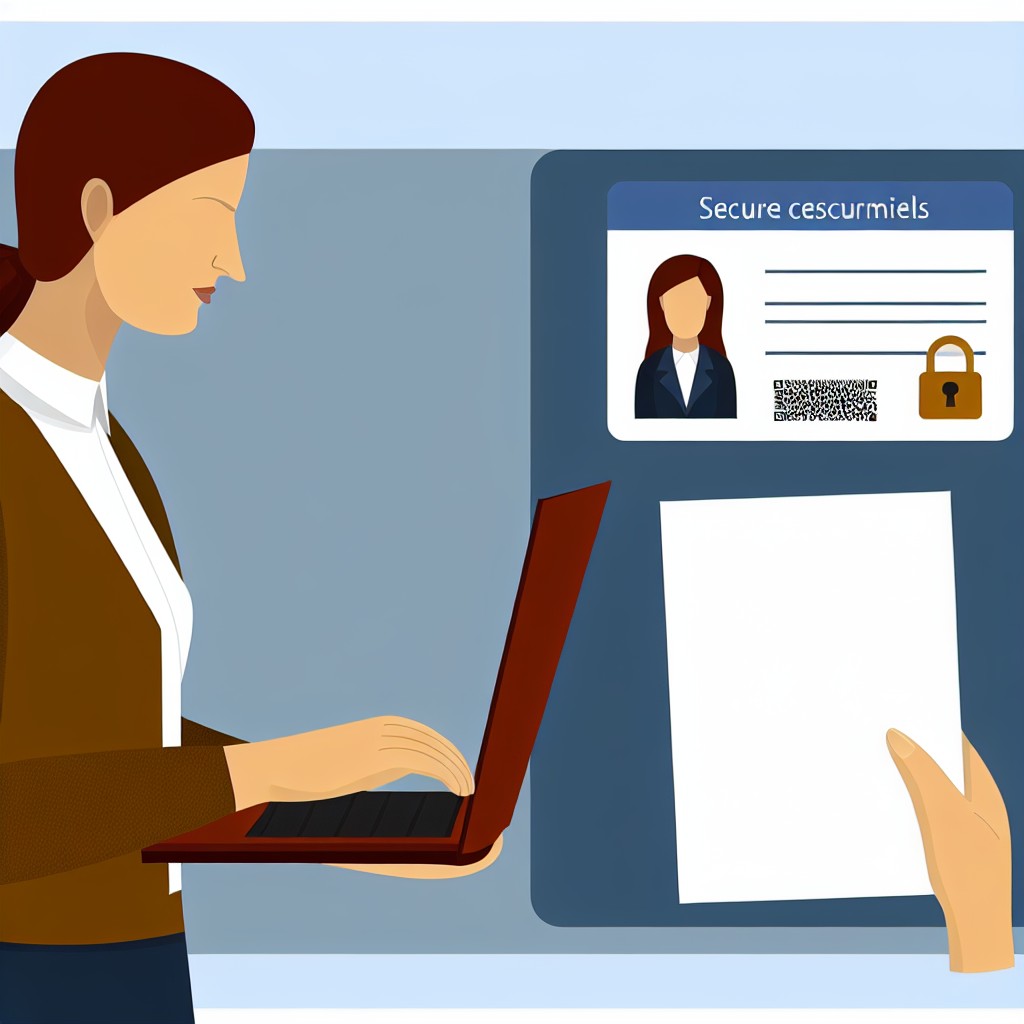
Data Anonymization and Minimization Practices for Privacy Protection
Principles of Data Anonymization
Our AI system removes personally identifiable details to protect user privacy.
It transforms sensitive information into anonymous data points.
This approach ensures no individual can be recognized from the stored data.
We apply techniques such as masking and tokenization for added security.
Consequently, even if data is accessed, sensitive credentials remain protected.
Strategies for Data Minimization
We collect only the essential information required to perform AI functions.
Our system avoids storing unnecessary personal data during processing.
Additionally, irrelevant details are discarded promptly after use.
This reduces the risk of sensitive information exposure substantially.
Our team regularly evaluates data collection policies for compliance.
Advantages of Combining Anonymization and Minimization
Together, these practices maintain strong privacy safeguards.
They limit data exposure and enhance trust among our users.
Companies like Lumina Insights and Vertex Solutions choose similar methods.
These steps align with global privacy regulations and best industry practices.
Compliance with Data Protection Regulations and Industry Standards
Adherence to Global Data Protection Laws
Our AI strictly follows international data protection regulations.
We ensure full compliance with the General Data Protection Regulation (GDPR).
Transform Your Content Workflow with Draft and Edit
Ready to elevate your WordPress content creation?
Visit
Draft and Edit today and experience the power of AI-driven drafts and seamless collaborative editing.
Join our community to streamline your content process and boost your productivity like never before!
Additionally, the AI respects the requirements of the California Consumer Privacy Act (CCPA).
By meeting these standards, we protect user privacy and data rights effectively.
Implementation of Industry Best Practices
Furthermore, we incorporate industry-leading security frameworks.
Our systems align with ISO/IEC 27001 standards for information security management.
We use encryption protocols such as TLS to secure data communication.
Moreover, our AI undergoes regular security audits conducted by external specialists.
Robust Credential Handling Procedures
We never store user credentials in plain text format.
Instead, we employ advanced hashing algorithms to protect sensitive information.
Our architecture limits access to credential data strictly on a need-to-know basis.
This minimizes risks associated with unauthorized data exposure.
Controlled Access to Drafts and User Data
Drafts and user-generated content are stored with strict access controls.
Only authorized personnel using secure authentication methods can access this data.
Additionally, access logs track every interaction with sensitive information.
Therefore, we maintain transparency and accountability for data handling.
Continuous Monitoring and Compliance Updates
We monitor regulatory changes to keep our compliance current.
Our legal and security teams collaborate to implement necessary updates promptly.
Hence, our AI consistently adheres to evolving privacy and security standards.
This proactive approach ensures ongoing protection of user credentials and data.
Procedures for Secure Credential Transmission and API Interactions
Encryption Protocols for Credential Handling
We ensure all user credentials undergo strong encryption before transmission.
Furthermore, we utilize TLS 1.3 to protect data during network exchanges.
Our system employs AES-256 encryption to secure sensitive information at rest.
Additionally, keys are rotated regularly to maintain robust security.
Authentication and Access Control
Our AI verifies credentials using multi-factor authentication methods.
Role-based access controls limit credential visibility to authorized components only.
Moreover, temporary tokens replace long-lived credentials in API interactions.
This approach reduces the attack surface for credential compromise.
Secure API Interaction Mechanisms
We establish API connections using mutual TLS for enhanced trust.
Our APIs enforce strict rate limiting to prevent misuse and abuse.
Authorization scopes are carefully defined to restrict API actions appropriately.
Furthermore, all API requests and responses are logged securely for audits.
Transform Your Content Workflow with Draft and Edit
Ready to elevate your WordPress content creation?
Visit
Draft and Edit today and experience the power of AI-driven drafts and seamless collaborative editing.
Join our community to streamline your content process and boost your productivity like never before!
Access Controls and Data Privacy for Drafts
Access to user drafts requires explicit permissions and secure authentication.
Draft data is transmitted over encrypted channels only.
We isolate draft data storage to prevent unauthorized access from other services.
Additionally, deletion requests for drafts trigger immediate and irreversible data removal.
Monitoring and Incident Response Strategies
Our security team continuously monitors credential transmission and API activities.
We deploy automated alerts to detect abnormal patterns promptly.
If a security incident arises, we activate predefined response protocols instantly.
These measures minimize risks and safeguard user credentials effectively.
User Control and Transparency Regarding Their Credentials and Drafts
Empowering Users Over Their Credentials
Our platform prioritizes user control of credential information at all times.
Users can add, update, or delete credentials through a secure dashboard.
Moreover, we notify users whenever credentials are accessed or used by the AI.
Furthermore, credential storage uses strong encryption to protect sensitive data.
We also ensure that no credentials are shared externally without explicit user consent.
Consequently, users maintain full ownership and control of their login information.
Clear Visibility Into Draft Handling
Users have transparent access to all drafts created or modified by the AI.
Each draft shows metadata including creation time and last modification details.
Additionally, users can easily review, edit, or delete drafts within minutes.
Our system keeps drafts private unless a user explicitly chooses to share them.
To enhance trust, we log all draft interactions in an accessible activity history.
Therefore, users know exactly how their content is managed throughout the process.
Policies That Support Privacy and Control
Our privacy policy clearly states how credentials and drafts are handled.
We never use user credentials for purposes beyond authentication and user-driven actions.
In addition, draft data is never sold or used for targeted advertising.
We conduct regular audits to verify compliance with all privacy and security regulations.
Lastly, our support team is available to assist users with any concerns about data handling.
Tools for Managing Access and Permissions
Users can set specific permissions for third-party integrations that require draft access.
Access revocation can be done instantly from the user settings panel.
We provide clear warnings before granting any new access permission requests.
Also, users receive email alerts for any significant changes to access rights.
This proactive approach prevents unauthorized access and ensures data integrity.
Transform Your Content Workflow with Draft and Edit
Ready to elevate your WordPress content creation?
Visit
Draft and Edit today and experience the power of AI-driven drafts and seamless collaborative editing.
Join our community to streamline your content process and boost your productivity like never before!
Additional Resources
Standards for Technology in Social Work Practice
FAQ for Copilot data security and privacy for Dynamics 365 and …