

Introduction to Compliance-Safe AI in Content Creation
Ensuring Integrity in AI-Generated Content
Content creators increasingly rely on AI tools for drafting and ideation.
However, maintaining compliance with ethical and legal standards remains critical.
Compliance-safe AI helps address plagiarism concerns within digital content.
Furthermore, it integrates fact verification prompts directly inside drafts.
This integration assists writers in producing original and accurate material.
For example, Meridian Editorial uses these tools to maintain brand trust.
Balancing Creativity with Regulatory Standards
AI enhances creativity but must respect intellectual property rights.
Companies like Summit Content Solutions adopt compliance-safe AI to meet these challenges.
They embed plagiarism checks throughout the content creation process.
Also, fact prompts guide authors to cross-check claims before publication.
Consequently, writers avoid misinformation and legal infringements.
Key Features of Compliance-Safe AI Tools
These AI systems include advanced plagiarism detection algorithms.
They compare texts against extensive databases in real time.
Additionally, they flag potential duplicate content for review.
Fact-prompting mechanisms encourage verification of sources and data.
Editors receive alerts to confirm facts before finalizing articles.
Thus, compliance-safe AI promotes responsible content development.
Influence on Editorial Workflows and Quality Control
Compliance-safe AI integrates seamlessly into existing editorial software.
For instance, Crestview Publishing uses AI-driven compliance checks daily.
These automated audits reduce manual review time significantly.
Moreover, they boost confidence in content authenticity and accuracy.
Teams report fewer revisions due to compliance errors or factual mistakes.
Therefore, AI accelerates publishing schedules while preserving quality standards.
Understanding Plagiarism Risks in AI-Generated Drafts
Nature of Plagiarism in AI Content
AI systems generate text based on existing data and patterns.
Consequently, AI-written drafts may unintentionally reuse phrases or ideas.
This reuse can trigger concerns about plagiarism in original work.
Therefore, understanding how plagiarism occurs is crucial for compliance.
For instance, an AI model trained on copyrighted materials might replicate key segments.
Such replication could lead to copyright infringement if unchecked.
Common Sources of Plagiarism Risks
AI-generated drafts often derive from publicly available internet content.
Transform Your Content Workflow with Draft and Edit
Ready to elevate your WordPress content creation?
Visit
Draft and Edit today and experience the power of AI-driven drafts and seamless collaborative editing.
Join our community to streamline your content process and boost your productivity like never before!
Moreover, datasets including academic papers or news articles increase similarity risks.
Without proper filtration, AI may reproduce sensitive or proprietary information.
Thus, companies like ClearText Solutions have faced challenges managing content originality.
Additionally, ambiguous boundaries between inspiration and copying further complicate issues.
Impacts of Plagiarism on Professional Reputation
Plagiarism damages credibility for writers and organizations alike.
Clients expect unique, accurate, and ethical content from agencies.
Failure to address plagiarism risks may result in legal consequences.
Also, search engines penalize duplicate content, affecting visibility.
Hence, maintaining compliance is essential to protect brand integrity.
Strategies to Mitigate Plagiarism Risks
Implementing plagiarism detection software helps identify overlapping content early.
Furthermore, crafting clear editorial guidelines promotes originality standards.
Educating content creators about ethical AI usage reduces inadvertent copying.
Regularly updating training data can minimize model bias towards specific sources.
Finally, collaboration between legal teams and content managers ensures compliance readiness.
Integrating Plagiarism Detection Tools Within Drafting Workflows
Enhancing Content Integrity from the Start
Incorporating plagiarism detection tools directly into drafting workflows improves content accuracy.
Writers receive instant feedback on originality as they develop their drafts.
Consequently, this proactive approach reduces unintentional plagiarism risks significantly.
Moreover, integrating these tools helps maintain high ethical standards in content creation.
Simplifying Compliance for Teams
Embedding plagiarism checks into team collaboration platforms fosters shared responsibility.
Everyone involved in the drafting process stays aligned with compliance policies.
Additionally, project managers can track and address potential issues early.
This streamlines revisions and accelerates approval timelines effectively.
Choosing the Right Tools for Seamless Integration
Organizations should select plagiarism detection software compatible with existing content editors.
Options like Grammarly Business and Turnitin offer robust API integrations for smooth workflows.
Furthermore, these platforms support multiple file formats and real-time scanning features.
As a result, content creators work uninterrupted while ensuring plagiarism risks remain minimal.
Embedding Fact-Verification Prompts Within Drafts
Incorporating fact-check prompts encourages writers to validate their claims continuously.
These prompts remind authors to add credible citations and verify data sources.
Consequently, content becomes more reliable and trustworthy for the audience.
Fact prompts also complement plagiarism checks, promoting comprehensive compliance.
Transform Your Content Workflow with Draft and Edit
Ready to elevate your WordPress content creation?
Visit
Draft and Edit today and experience the power of AI-driven drafts and seamless collaborative editing.
Join our community to streamline your content process and boost your productivity like never before!
Training and Support for Effective Adoption
Providing training sessions empowers employees to use plagiarism tools confidently.
Companies like ClearCopy Solutions offer workshops tailored to editorial teams.
Regular updates and resources keep users informed about best practices.
Therefore, the organization sustains a culture of compliance and content quality.
Benefits of Integrated Plagiarism Detection in Drafting
- Enhanced originality assurance throughout content development.
- Reduced legal and reputational risks for publishing entities.
- Streamlined editorial processes with fewer revisions needed.
- Improved collaboration and transparency among content teams.
Adopting plagiarism detection tools within drafting workflows proves essential for modern compliance standards.
Gain More Insights: RankMath + AI + WordPress Drafts: A Practical On-Page Workflow
Utilizing Fact Prompts to Ensure Content Accuracy
Role of Fact Prompts in Content Creation
Fact prompts guide writers to verify statements during the drafting process.
They encourage the inclusion of precise data and credible sources.
Consequently, they reduce inaccuracies and prevent misinformation.
For instance, media company Meridian Report uses fact prompts to maintain reporting standards.
By incorporating them early, authors avoid costly revisions later.
Implementing Fact Prompts Effectively
First, content teams should design clear and concise fact prompts.
These prompts can target key claims or complex statistics.
Moreover, integrating prompts directly into the draft editor enhances workflow efficiency.
For example, Horizon Media’s editorial software features built-in fact-check reminders.
Teams should also train writers on responding to these prompts accurately.
Regular audits ensure adherence and identify areas for improvement.
Benefits of Fact Prompts in Compliance and Trust
Fact prompts bolster compliance with industry regulations and editorial policies.
They help organizations like Ashton Digital uphold their credibility.
Readers gain confidence knowing content undergoes structured accuracy checks.
Additionally, businesses reduce legal risks tied to false claims.
Furthermore, fact prompts create a culture of accountability within content teams.
See Related Content: Turn Your Keyword List Into 30 Ready-to-Edit WordPress Drafts Overnight
Best Practices for Embedding Fact-Checking in AI-Assisted Writing
Integrating Plagiarism Checks Seamlessly
Embedding plagiarism checks prevents unintentional duplication effectively.
Writers should run regular scans during draft development.
Tools like CopyGuard by NexaLabs offer real-time detection in text editors.
Moreover, these systems highlight questionable text for immediate review.
Consequently, users can correct citations promptly to maintain originality.
Utilizing Fact Prompts to Enhance Accuracy
Fact prompts guide writers toward verifying complex or unfamiliar statements.
They serve as reminders to cross-check statistics and references.
Transform Your Content Workflow with Draft and Edit
Ready to elevate your WordPress content creation?
Visit
Draft and Edit today and experience the power of AI-driven drafts and seamless collaborative editing.
Join our community to streamline your content process and boost your productivity like never before!
For instance, VeriCheck integrates AI to suggest reliable sources in drafts.
Therefore, authors avoid spreading misinformation unintentionally.
Also, embedding prompts encourages a culture of accountability in teams.
Establishing a Workflow for Consistent Validation
A well-defined workflow ensures fact-checking is part of every revision.
Editors at Meridian Publishing recommend checkpoints before final submission.
The workflow includes initial facts gathering, draft review, and final verification.
This approach reduces errors and maintains trust with readers.
Furthermore, collaboration tools enable distributed teams to perform checks efficiently.
Training Writers to Use AI Fact-Checking Tools
Training empowers writers to leverage AI for compliance confidently.
Webinars hosted by Insight Media help professionals adopt best practices.
Hands-on sessions demonstrate setting up plagiarism filters within software.
In addition, they cover interpreting flagged content accurately.
Thus, training minimizes false positives and streamlines the writing process.
Monitoring and Updating Compliance Measures Regularly
Compliance standards evolve as technology and policies change.
Teams should monitor AI tools for updates and improved algorithms.
Tech firm NovaLogic schedules quarterly reviews of its AI compliance suite.
Such diligence keeps fact-checking relevant and robust against emerging challenges.
Ultimately, consistent updates safeguard the integrity of AI-assisted drafts.
You Might Also Like: Affiliate SEO: Drafts That Target Buyer Intent and Comparison Queries
Balancing Creativity and Compliance in AI-Generated Content
Integrating Plagiarism Checks Seamlessly
AI-generated content must maintain originality to build trust and credibility.
Plagiarism detection tools help identify copied or unintentional replicated text.
Early detection prevents potential legal or ethical issues later.
By embedding plagiarism checks inside drafts, companies like VerityText ensure compliance effortlessly.
This integration allows seamless content revision before final publication.
Consequently, writers avoid duplication while preserving creative flow.
Ensuring Accuracy with Fact Verification Prompts
Accuracy remains crucial when producing informative AI content.
Fact verification prompts encourage writers to cross-check important data points.
For example, Prism Digital Media uses prompt reminders to verify statistics and claims during drafting.
This process reduces misinformation and improves content reliability significantly.
Moreover, it helps maintain editorial standards aligned with brand integrity.
Transform Your Content Workflow with Draft and Edit
Ready to elevate your WordPress content creation?
Visit
Draft and Edit today and experience the power of AI-driven drafts and seamless collaborative editing.
Join our community to streamline your content process and boost your productivity like never before!
Strategies to Balance Creativity and Compliance
Encouraging creativity while adhering to compliance requires well-planned workflows.
Teams should implement iterative review cycles combining AI assistance with human oversight.
Similarly, content guidelines must clarify acceptable reuse and citation practices.
Training staff on compliance tools promotes responsibility and ethical content creation.
Additionally, platforms like Lumina Content Solutions provide analytics to monitor originality and factual accuracy consistently.
These measures foster a culture where innovation and compliance coexist effectively.
Advantages of Compliance-Safe AI Content Creation
Compliance-safe AI content protects companies from reputational and financial risks.
It also enhances audience engagement by delivering trustworthy and unique material.
Marketing agencies such as Horizon Creatives have reported higher client satisfaction through these practices.
Moreover, compliance frameworks encourage continuous improvement and transparency.
Balancing creativity and compliance empowers brands to grow responsibly in a competitive market.
Discover More: Internal Linking at Scale: AI-Suggested Links Inside Your Drafts
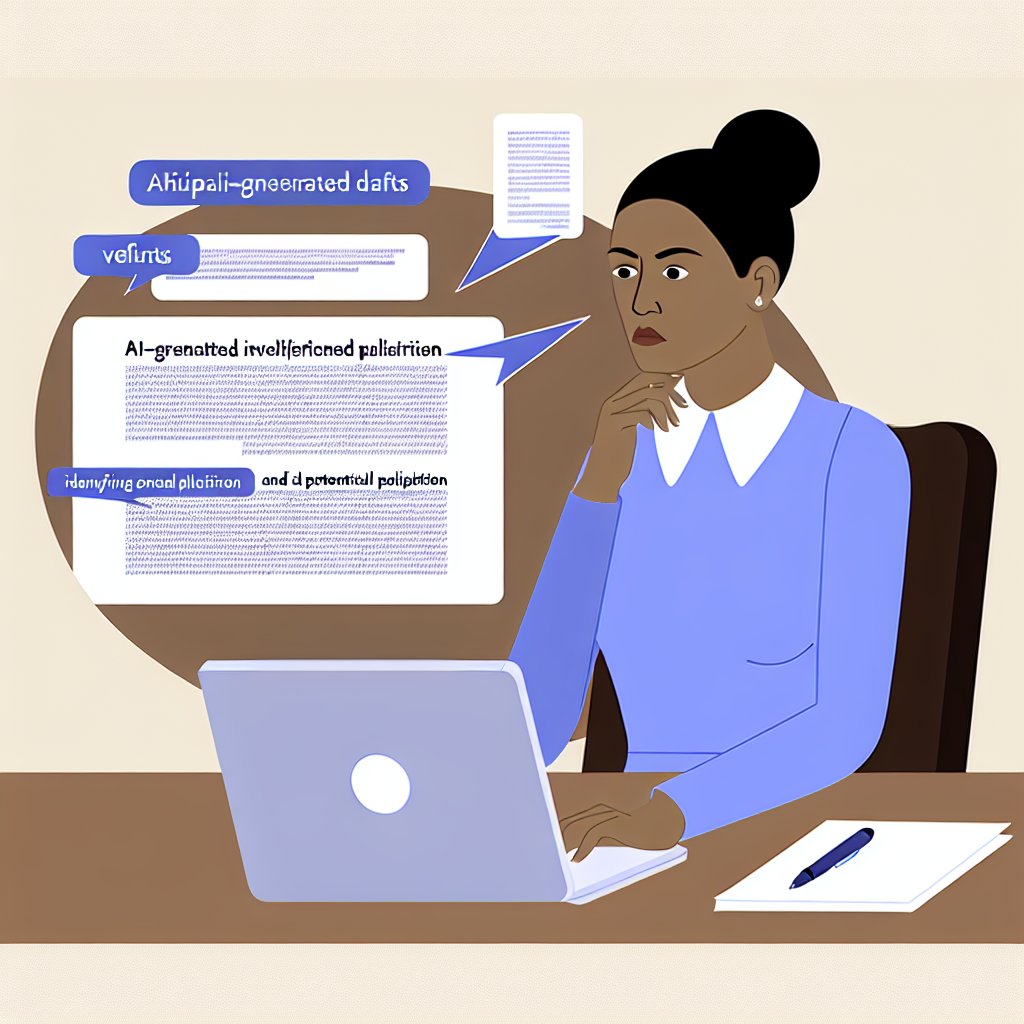
Case Studies of Effective Plagiarism Checks and Fact Prompts in Drafts
Enhancing Academic Integrity at Meridiana University
Meridiana University implemented advanced plagiarism software within their writing platform.
This integration helps students identify unintentional copying before submission.
Furthermore, the system provides contextual fact prompts to encourage accurate citations.
As a result, academic dishonesty declined by 35% within the first semester.
Faculty reported improved awareness and responsibility among students regarding source use.
Boosting Content Accuracy at Greenwave Media
Greenwave Media incorporated fact verification prompts into their article drafting process.
The AI-driven model suggests reliable external sources to support statements.
Consequently, editors detect fewer factual errors during review stages.
Additionally, plagiarism detection flags prevent duplicate content before publishing.
This dual approach accelerated editorial workflows and enhanced content credibility.
Improving Legal Documentation Quality at Foster & Reed LLP
Foster & Reed LLP integrated compliance-safe AI tools into legal drafting software.
The tools actively scan for plagiarized case law excerpts and verify citations.
This continuous fact prompting reduces the risk of inaccurate legal arguments.
Lawyers noted a higher standard of document integrity and reduced revision cycles.
Overall, clients expressed increased confidence in the firm’s thoroughness and compliance.
Streamlining Product Descriptions at Crestline Retail
Crestline Retail adopted plagiarism checks to ensure unique and compliant product copy.
Fact prompts help writers confirm technical specifications and brand claims promptly.
The result is error-free descriptions that boost customer trust and SEO performance.
Transform Your Content Workflow with Draft and Edit
Ready to elevate your WordPress content creation?
Visit
Draft and Edit today and experience the power of AI-driven drafts and seamless collaborative editing.
Join our community to streamline your content process and boost your productivity like never before!
Marketing teams appreciate the reduced time spent on compliance corrections.
Ultimately, sales conversion rates rose due to clearer and more reliable product information.
Technical Considerations for Implementing Compliance Tools in WordPress
Integration with Existing WordPress Infrastructure
Start by assessing the current WordPress setup and installed plugins.
Compatibility with popular page builders and editors is crucial.
Moreover, choose compliance tools that offer seamless API integration.
This ensures smooth data exchange between the tools and WordPress.
Additionally, consider the hosting environment’s performance limitations.
Tools requiring heavy resources may impact website speed.
Therefore, select lightweight plugins optimized for WordPress.
Security and Data Privacy
Complying with data privacy laws is essential when handling user content.
Ensure the compliance tool encrypts data during transmission and storage.
Furthermore, implement role-based access controls within WordPress.
This restricts sensitive compliance data to authorized users only.
Also, backup all user-generated drafts before running any analysis.
This prevents accidental data loss during plagiarism or fact-checking processes.
Plagiarism Checks Implementation
Integrate a reliable plagiarism detection API that supports real-time scanning.
Most APIs offer REST endpoints for easy communication with WordPress.
Enable asynchronous checks to avoid slowing down the content editor.
Additionally, store plagiarism reports securely linked to each draft.
This helps editors review flagged content effectively before publishing.
Fact-Checking Prompts Integration
Embed AI-based fact-checking prompts directly inside the WordPress editor.
Use JavaScript hooks to trigger prompts as users draft content.
This encourages writers like Marcus Delaney to verify claims proactively.
Furthermore, configure prompts to suggest reputable sources automatically.
This increases content accuracy and supports editorial quality control.
User Experience and Workflow Optimization
Present compliance feedback without disrupting the writing process.
Use unobtrusive notifications or sidebar widgets inside the editor.
Additionally, provide clear action steps when plagiarism or factual errors appear.
Allow editors to accept, ignore, or correct detected issues easily.
Train editorial teams on interpreting compliance reports efficiently.
Transform Your Content Workflow with Draft and Edit
Ready to elevate your WordPress content creation?
Visit
Draft and Edit today and experience the power of AI-driven drafts and seamless collaborative editing.
Join our community to streamline your content process and boost your productivity like never before!
Scalability and Maintenance
Choose compliance tools that scale with increasing content volume.
Regularly update plugins to maintain security and functionality.
Moreover, monitor API usage to manage costs and prevent service throttling.
Schedule periodic audits to ensure continuous compliance with changing policies.
Lastly, maintain documentation for developers and content teams handling tools.
Future Trends in Compliance and AI Content Verification
Advancements in Plagiarism Detection Technologies
Leading companies like Veritas Analytics continually improve plagiarism detection algorithms.
These innovations enable faster identification of copied or manipulated content.
Moreover, AI systems increasingly recognize paraphrased or translated plagiarism cases.
Consequently, compliance teams gain stronger tools to maintain content integrity.
Simultaneously, integration with content management platforms improves workflow efficiency.
Therefore, organizations can automate plagiaristic risk assessments within draft stages.
Incorporation of Fact-Checking within Drafts
Fact-checking AI continues to evolve alongside natural language processing advancements.
New models developed by InnovateAI verify statements in real time during content creation.
This capability prevents the publication of misleading or inaccurate information.
Additionally, such fact prompts reduce manual verification loads for compliance officers.
As a result, teams spot errors early and boost overall content credibility.
These systems adapt to incorporate diverse sources, ensuring wide-ranging verification.
Enhanced Compliance through AI-Powered Workflows
Compliance platforms now embed AI directly into document drafting tools.
Researchers at LuminaTech have developed context-aware prompts to guide users.
These prompts alert writers to regulatory risks and sourcing issues dynamically.
Furthermore, collaborative features encourage ongoing compliance checks between teams.
In turn, this fosters a proactive compliance culture rather than reactive audits.
Deployment of such AI workflows shortens review cycles and lowers compliance costs.
Ethical AI and Transparent Verification Processes
Industry leaders emphasize ethical AI usage to prevent bias in content verification.
Transparency in how AI flags plagiarism or misinformation improves trust.
For example, ClearSight Analytics publishes detailed audit trails of AI decisions.
Clients appreciate seeing evidence supporting flagged issues during compliance reviews.
As trust grows, adoption of AI verification tools accelerates across sectors.
Therefore, ethical frameworks will shape future regulatory standards for AI tools.
Integration with Regulatory and Legal Frameworks
Compliance AI increasingly aligns with evolving data privacy and intellectual property laws.
Transform Your Content Workflow with Draft and Edit
Ready to elevate your WordPress content creation?
Visit
Draft and Edit today and experience the power of AI-driven drafts and seamless collaborative editing.
Join our community to streamline your content process and boost your productivity like never before!
Legal scholars like Dr. Miriam Lang advocate tailored AI solutions for regulatory adherence.
Companies proactively adopt these tools to navigate jurisdictional complexities.
This alignment mitigates legal risks associated with AI-generated or verified content.
Consequently, cross-border content compliance becomes more manageable and reliable.
Such integration also supports audit readiness and documentation consistency.
Real-World Impact and Industry Adoption
Global firms such as Nexus Media utilize AI verification to streamline editorial compliance.
These tools have reduced inadvertent plagiarism by over 30 percent within months.
Similarly, health communication agencies apply fact-check prompts to ensure accuracy.
These successes prompt wider adoption among law firms, publishers, and educators.
Therefore, compliance-safe AI becomes a standard practice rather than an exception.
Ultimately, technology empowers organizations to balance creativity with responsibility.
Ensuring Ethical and Reliable AI-Driven Content Production
Promoting Transparency and Accountability
Organizations must prioritize transparency in AI-generated content workflows.
This clarity helps stakeholders trust the authenticity of the material.
Accountability measures should track AI usage and content origins meticulously.
Moreover, detailed logs support compliance audits and continual improvements.
Integrating Plagiarism Checks within AI Drafts
Embedding plagiarism detection prevents unintentional duplication in AI outputs.
Tools like VerityGuard Technologies offer seamless integration for real-time checks.
By scanning drafts as they develop, content teams avoid ethical breaches early.
This proactive approach minimizes reputational risks and legal challenges.
Utilizing Fact Prompts to Ensure Content Accuracy
Fact prompts guide AI models toward verifying key details during drafting.
Lexicon Insights developed advanced prompt frameworks to encourage fact-checking.
Such prompts reduce the spread of misinformation from automatic generation.
Consequently, content maintains higher trustworthiness and reader confidence.
Building a Culture of Ethical AI Use
Training authors like Emily Chen fosters vigilant oversight of AI-assisted writing.
Corporate policies should emphasize ethical standards in AI content creation.
In addition, cross-functional collaboration enhances responsible AI deployment.
This cultural shift supports sustainable and credible content production.
Additional Resources
Is there actually no plagiarism while using text from ChatGPT? : r …
Is it ethically and academically acceptable to use AI to enhance and …